Amicus Brief to U.S. Supreme Court in Expressions Hair Design v. Schneiderman
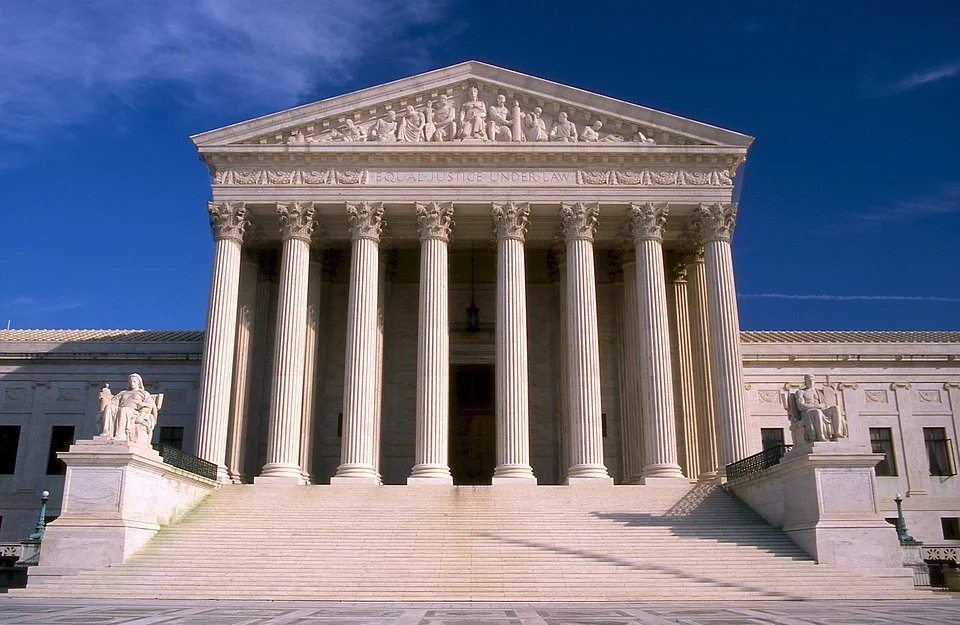
In 2016, several New York businesses sued the state, claiming that a law prohibiting them from posting about and charging a fee for credit card transactions was an unconstitutional restriction on commercial speech. The lower court disagreed and the U.S. Supreme Court agreed to hear the case. As “Constitutional, Administrative, Contracts, and Health Law Scholars,” several George Consortium members filed a brief in support of the state.
In 2016, several New York businesses sued the state, claiming that a law prohibiting them from posting about and charging a fee for credit card transactions was an unconstitutional restriction on commercial speech. The lower court disagreed and the U.S. Supreme Court agreed to hear the case. As “Constitutional, Administrative, Contracts, and Health Law Scholars,” several George Consortium members filed a brief in support of the state. They highlighted that such commercial conduct being treated as speech protected by the First Amendment threatened “vast swaths” of regulations, including longstanding health, safety, and consumer protection laws. In 2017, the Supreme Court issued a relatively narrow ruling, holding that the New York law did regulate speech and therefore implicated the First Amendment. But the Court sent the case back to the lower court without determining the appropriate level of scrutiny to apply.
Read the brief here.
Summary by Elisabeth J. Ryan

Advancing Public Health Through the Law: The Role of Legal Academics
In July 2012, 25 legal and public health academics convened a workshop to explore ways in which legal academics can better strengthen engagements with public health practice. The group recognized that the law has always been an integral part of public health, yet legal scholars are too often removed from the front line practice. In order to bridge this disconnect so that practitioners can benefit from and utilize ongoing legal research, the group pledged: (1) to work together to create a narrative counter to the “public responsibility” trope that dominated public health policy discussions; (2) to reduce overreliance on regulation and focus on shaping social norms directly via the law; (3) to assess the balance between targeting at-risk populations while still respecting rights; (4) to bring focused litigation against regulatory capture; (5) to research the impact of law on health; and (6) to bridge silos in order to create a unified front for improving public health.
In July 2012, 25 legal and public health academics convened a workshop to explore ways in which legal academics can better strengthen engagements with public health practice. The group recognized that the law has always been an integral part of public health, yet legal scholars are too often removed from the front line practice. In order to bridge this disconnect so that practitioners can benefit from and utilize ongoing legal research, the group pledged: (1) to work together to create a narrative counter to the “public responsibility” trope that dominated public health policy discussions; (2) to reduce overreliance on regulation and focus on shaping social norms directly via the law; (3) to assess the balance between targeting at-risk populations while still respecting rights; (4) to bring focused litigation against regulatory capture; (5) to research the impact of law on health; and (6) to bridge silos in order to create a unified front for improving public health.
Advancing Public Health Through the Law: The Role of Legal Academics
Summary by Elisabeth J. Ryan