

Mere Exposure to STDs May Not Be Enough to Prove Damages in Usher Case
Three past sexual partners of entertainer Usher are now suing him for allegedly exposing them to genital herpes without their knowledge or consent.
Three past sexual partners of entertainer Usher are now suing him for allegedly exposing them to genital herpes without their knowledge or consent. But only one of the plaintiffs, named as Jane Doe, has actually contracted herpes. A person with a communicable disease who “willfully exposes” another person can be charged with a misdemeanor in California, but this civil suit is instead claiming that Usher “has a duty to warn and [that] he is liable for exposure even if the other person is negative for herpes.” The plaintiffs did not specify how much money they are seeking, but their attorney Lisa Bloom said that her clients want the 38-year-old actor/singer to “either contact his sexual partners if the diagnosis is true or make a public statement to put people’s mind at ease.” In 2012, Usher paid $1.1 million to settle another lawsuit alleging he gave a woman herpes.
George Consortium member Scott Burris – law professor at Temple University and director of the Center for Public Health Law Research – told the Huffington Post that proving damages for a plaintiff who has not actually contracted herpes will be challenging. Unlike the costs of medical care, “emotional distress” is much more difficult to quantify. Further, as Burris told us here at Public Health Law Watch, “Everyone who is having sex out in the world…is now potentially exposed to a sexually transmitted disease. Courts should not be awarding large denomination damages to people who are running what is essentially a normal risk of everyday life.”

Recent Study Shows Stronger Firearms Laws Associated with Fewer Fatal Shootings by Police
In 2015 and 2016, at least 2239 people were killed by police in the United States, overwhelmingly by gunshot. But a recent study shows that fatal shootings by police are half as common in states with stricter firearms laws than in those with the most permissive laws.
In 2015 and 2016, at least 2239 people were killed by police in the United States, overwhelmingly by gunshot. But a recent study shows that fatal shootings by police are half as common in states with stricter firearms laws than in those with the most permissive laws. Firearm Legislation and Fatal Police Shootings in the United States (by Aaron J. Kivisto, Bradley Ray, and Peter L. Phalen), published in the July 2017 issue of the American Journal of Public Health, primarily used data on police shootings collected by British newspaper The Guardian (as no official nationwide database exists) and a numerical system indicating the strength of a state’s firearms laws. Taking into account laws such as those instituting stronger background checks, carrying firearms in public, and addressing gun trafficking, the study ranked states based on the strongest firearms laws (the highest being California with a score of 31) to the weakest (Arkansas, Idaho, and Kansas with 4). “[E]ach 1-point increase in firearm legislative strength was associated with a 4% reduction in mortality.” States with the strongest firearm laws had rates of fatal police shootings more than 50% lower than in states with the weakest firearm legislation. This association remained even after controlling for age, education, violent crime rate, and household gun ownership rate.

Republicans Failed Because They Have No Idea What Kind of Health Care They Actually Want
Not so long ago, much of the Republican Party stood united in a vision for health care.
Not so long ago, much of the Republican Party stood united in a vision for health care. For 20 years, Party leaders from across the political spectrum coalesced around elements of a plan that would use the private market to broadly expand coverage.
The plan looked something like this. All Americans would be subject to a mandate to obtain health insurance for themselves and their families or pay a penalty along with their taxes. Most employers would be mandated to offer insurance to their workers. Those without access to employer-sponsored coverage would buy policies on an exchange directly from insurance companies, and insurers would be required to offer coverage regardless of an applicant’s health status. Subsidies would be available for those with low incomes, and those who were very poor would receive coverage under an expanded Medicaid program.
Sound familiar? It is the essence of Romneycare, the health reform plan enacted in Massachusetts in 2006 with the support of Republican governor Mitt Romney.
Romneycare emerged after more than 15 years of Republican efforts to implement such a system. It was originally devised by the Heritage Foundation, a conservative think-tank, in 1989. The concept was supported by 21 Republican senators in 1993, including many moderates, when it formed the basis of the Health Equity and Access Reform Today Act, an alternative to the Clinton plan that was then being debated in Congress.
Heritage encouraged the enactment of Romneycare in 2006 and subsequently touted the plan as a workable solution that should be implemented across the country.
And the concept formed the basis of a plan proposed in 2009 by two conservative Republicans, Representative Paul Ryan and Senator Tom Coburn, the Patients’ Choice Act.
Of course, the Republican market-based plan is also the core of the Affordable Care Act.
What happened when Democrats signed on to the approach? The Republican consensus immediately evaporated. Even Heritage turned against its own handiwork. As soon as the ACA was enacted in 2010, Republicans in Congress announced unbending opposition and began an unrelenting effort to “repeal and replace.”
But seven years later, that promise remains little more than a slogan. Republicans voted more than 60 times to repeal all or part of the ACA while Obama was president, knowing their votes were merely symbolic, since he was certain to veto any legislation that emerged.
And now that they control of both houses of Congress and the White House and have the chance to actually bring a plan to fruition, they can’t figure out what they want.
Republican conservatives want to eliminate any trace of the ACA, even if it means denying lifesaving health care to tens of millions of Americans. Moderates want to insure that whatever form a replacement takes, the ACA’s coverage gains are largely maintained. The Republican health care bill that failed in the Senate this week, the Better Care Reconciliation Act, meets the goals of neither wing.
President Trump can’t seem to decide what he wants, either. He promised at the start of the presidential campaign that he would not reduce Medicaid spending, but his budget proposal includes major cuts.
The only unifying theme in Republican positions today is a desire to dismantle anything created by President Obama and his Democratic colleagues, even programs based largely on their own principles. That is hardly a vision for constructive public policy.
Crafting a complex government program requires painstaking work, including the arduous task of consensus building. It is not accomplished by hatching a plan through the secret deliberations of 13 senators, as Senate Republicans did in crafting the BCRA, and then rushing it to a vote.
But the laborious work of building programs and forging consensus is the essence of governing. That’s a lesson members of the Republican leadership do not seem to have learned. With their failure, at least so far, to either repeal or replace the ACA, they are now seeing the results.
_______________________________
Previously posted on the Health Cents blog on Philly.com.

Can Trump Simply Stop Paying Subsidies to Insurance Companies?
In recent days, President Donald Trump announced, via Twitter, that "If a new HealthCare Bill is not approved quickly, BAILOUTS for Insurance Companies and BAILOUTS for Members of Congress will end very soon!" He was presumably referring first to cost-sharing reduction subsidy payments to insurance companies required by the Affordable Care Act and, second, to the fact that members of Congress and their staff are required to buy health insurance on the ACA market instead of being allowed on the federal employee health plan. However, unlike most people who purchase insurance via the marketplace, Congressional staffers still receive an employer subsidy. Ending subsidy payments to insurance companies could be catastrophic to the market - so can Trump simply stop paying them?
In recent days, President Donald Trump announced, via Twitter, that "If a new HealthCare Bill is not approved quickly, BAILOUTS for Insurance Companies and BAILOUTS for Members of Congress will end very soon!" He was presumably referring first to cost-sharing reduction subsidy payments to insurance companies required by the Affordable Care Act and, second, to the fact that members of Congress and their staff are required to buy health insurance on the ACA market instead of being allowed on the federal employee health plan. However, unlike most people who purchase insurance via the marketplace, Congressional staffers still receive an employer subsidy. Ending subsidy payments to insurance companies could be catastrophic to the market - so can Trump simply stop paying them?
Section 1402 of the Affordable Care Act mandates that insurers reduce the amount of cost-sharing that individuals are responsible for; in turn, the government pays the insurer subsidies in order to make up for the discounts passed onto consumers. However, the House of Representatives sued the then-Obama administration in 2014, claiming that such subsidy payments were illegal and unconstitutional because Congress never made specific appropriations for them. In May 2016, the federal district court decided in favor of the House , finding that the executive branch (the Department of Health and Human Services in this case) making payments to insurers in the absence of a specific Congressional appropriation to do so is illegal and must cease. The judge stayed her order, however, pending appeal (or, as the Republicans hoped, a change in the law entirely). This has left the payments in a sort of limbo - the Obama administration continued to pay the subsidies and, thus far, so has the Trump administration. But he has been hinting for months that wants to stop that practice; in response, numerous state Attorneys General filed a motion to intervene in the case, fearing that Trump would drop the appeal and allow the order of non-payment to stand. On August 1, the court granted the motion, ensuring that the appeal will at least continue. A crucial legal questions remains: even if the district court's order is overturned, would that simply allow the administration to continue making payments or is there some mechanism to compel the payments?
The House has relied on the fact that a specific appropriation exists for section 1401 of the ACA, which grants tax credits to some individuals to offset their insurance purchase costs. And because section 1402 (the insurance subsidies) is not specified in that or any other appropriation, the court agreed that no such appropriation exists. However, as the Obama administration and now the state AGs argue, the 1401 appropriation also covers 1402; that is, indeed, the fund used currently to pay the subsidies.
If the government stops paying the subsidies, there is little question that the insurance market will destabilize quickly and critically. While the details may vary based on state law, insurers could drop participation in the marketplace for the rest of 2017, could choose not to be part of the marketplace in 2018 at all, and would certainly raise premium costs for consumers, perhaps as much as 20%.
If Trump does announce that he will cut off payment of the subsidies to the insurance companies – the next payment is due on August 21 – states, insurance companies, and perhaps even consumers would likely sue immediately. Indeed, some states may be preparing to file an action before he even announces a decision. As California Attorney General Xavier Becerra has said, “We’re not going to wait to find out what Donald Trump wants to do. My team is ready to defend these subsidies in court.” AG Becerra has characterized the President’s threats to end the subsidies as “extortionist tactics.”
Of course, Congress could remove the uncertainty (at least temporarily) about whether the subsidy payments will continue by passing a specific appropriation and may be attempting a bipartisan solution to do so. But unless and until that happens, the insurance marketplace - and the healthcare plans of millions of consumers - remains in a precarious position.

Health Care for Trans Military Members is Not That Expensive
Today, the President tweeted that he is barring all transgender individuals from serving in the military "in any capacity." One justification he claimed was their "tremendous medical costs." But, as STAT points out, "at least two studies in recent years have found that the cost of medical care for transgender service members would be minimal."
Today, the President tweeted that he is barring all transgender individuals from serving in the military "in any capacity." One justification he claimed was their "tremendous medical costs." But, as STAT points out, "at least two studies in recent years have found that the cost of medical care for transgender service members would be minimal."
A June 2016 study from the RAND Corporation estimated that there were between 1,320 and 6,630 transgender active-duty service members — out of 1.3 million service members in total — and noted that not all of them would seek treatment related to gender transitioning. The study also estimated that the cost associated with medical care for gender transition would only increase military health care expenditures by between $2.4 million and $8.4 million each year — an increase of between 0.04 and 0.13 percent.
A September 2015 study published in the New England Journal of Medicine reached similar cost estimates. The study estimated that there were about 12,800 transgender service members who would be eligible for medical care. But it hypothesized that fewer than 200 would require care for gender transition each year, based on the percentage of transgender people who sought such care outside the military and the percentage of Australian service members who sought transition-related care.
The overall estimated cost to the Pentagon: $4.2 million to $5.6 million — what the study’s author called “little more than a rounding error in the military’s $47.8 billion annual health care budget.”
Amicus Brief to U.S. Supreme Court in Expressions Hair Design v. Schneiderman
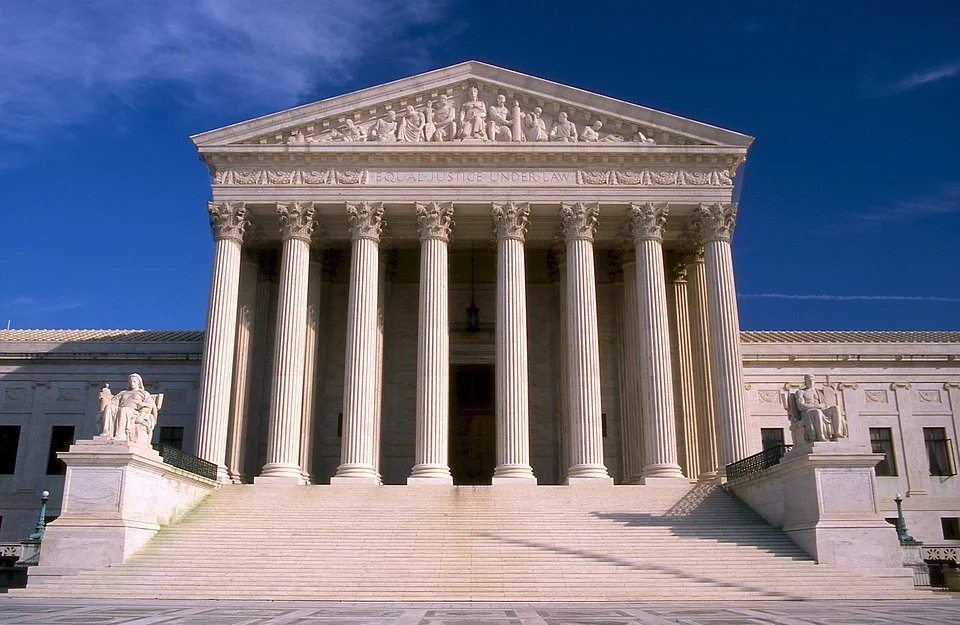
In 2016, several New York businesses sued the state, claiming that a law prohibiting them from posting about and charging a fee for credit card transactions was an unconstitutional restriction on commercial speech. The lower court disagreed and the U.S. Supreme Court agreed to hear the case. As “Constitutional, Administrative, Contracts, and Health Law Scholars,” several George Consortium members filed a brief in support of the state.
In 2016, several New York businesses sued the state, claiming that a law prohibiting them from posting about and charging a fee for credit card transactions was an unconstitutional restriction on commercial speech. The lower court disagreed and the U.S. Supreme Court agreed to hear the case. As “Constitutional, Administrative, Contracts, and Health Law Scholars,” several George Consortium members filed a brief in support of the state. They highlighted that such commercial conduct being treated as speech protected by the First Amendment threatened “vast swaths” of regulations, including longstanding health, safety, and consumer protection laws. In 2017, the Supreme Court issued a relatively narrow ruling, holding that the New York law did regulate speech and therefore implicated the First Amendment. But the Court sent the case back to the lower court without determining the appropriate level of scrutiny to apply.
Read the brief here.
Summary by Elisabeth J. Ryan

Advancing Public Health Through the Law: The Role of Legal Academics
In July 2012, 25 legal and public health academics convened a workshop to explore ways in which legal academics can better strengthen engagements with public health practice. The group recognized that the law has always been an integral part of public health, yet legal scholars are too often removed from the front line practice. In order to bridge this disconnect so that practitioners can benefit from and utilize ongoing legal research, the group pledged: (1) to work together to create a narrative counter to the “public responsibility” trope that dominated public health policy discussions; (2) to reduce overreliance on regulation and focus on shaping social norms directly via the law; (3) to assess the balance between targeting at-risk populations while still respecting rights; (4) to bring focused litigation against regulatory capture; (5) to research the impact of law on health; and (6) to bridge silos in order to create a unified front for improving public health.
In July 2012, 25 legal and public health academics convened a workshop to explore ways in which legal academics can better strengthen engagements with public health practice. The group recognized that the law has always been an integral part of public health, yet legal scholars are too often removed from the front line practice. In order to bridge this disconnect so that practitioners can benefit from and utilize ongoing legal research, the group pledged: (1) to work together to create a narrative counter to the “public responsibility” trope that dominated public health policy discussions; (2) to reduce overreliance on regulation and focus on shaping social norms directly via the law; (3) to assess the balance between targeting at-risk populations while still respecting rights; (4) to bring focused litigation against regulatory capture; (5) to research the impact of law on health; and (6) to bridge silos in order to create a unified front for improving public health.
Advancing Public Health Through the Law: The Role of Legal Academics
Summary by Elisabeth J. Ryan