
COVID Law Briefing: Protecting the Vulnerable Substance Use Disorder Population During COVID-19- Summary
How has the substance use disorder population been effected by COVID-19? Learn more here.
Earlier this year, Public Health Law Watch, in collaboration with members of the George Consortium and other partner organizations, hosted a series of legal briefings related to COVID-19 and legal and policy issues associated with the global pandemic. Experts and scholars joined us for bi-weekly livestreamed discussions on these issues. We invite you to read the summaries of selected episodes below! And, enjoy relistening to the series (linked below and archived on our #COVIDLawBriefing webpage).
----------
4/9/20: Protecting the Vulnerable Substance Use Disorder Population During COVID-19
Mod: Leo Beletsky
Speaker: Nicolas Terry
Professor Beletsky moderated a discussion with Professor Terry on protecting the vulnerable substance use disorder (sud) population on this #COVIDLawBriefing. The panelists get into the nuances of substance use disorder that makes it unique from any other illness. Most obviously, you can get arrested for sud. What people may not know is how important privacy is to this population. As the professors pointed out, you can lose employment, or even your children, if you are part of the sud population. This means that loosening privacy rights is a huge concern. Before COVID-19 hit, people were already not getting adequate treatment due to both lack of healthcare and the huge stigma that still surrounds this disorder. Next the discussion pivoted to how COVID-19 has exposed our public health system for not protecting its most vulnerable populations including the “disproportionate deaths in black and brown communities.” Especially with some states not participating in the recent expansion of Medicaid, many front line people from health care providers to delivery drivers have been left without health insurance. The Cares Act has also left the sud population more vulnerable to their personal information getting out. For health care operations, disclosures go to non-patient care functions which means that many more people will have access to personal information. This will be especially problematic in more rural areas where communities are smaller and the leaking of personal information could have a negative impact on many aspects of a person's life. They finished with a discussion of how the healthcare delivery systems have been “more creative” as a result of this crisis. This has been especially true in the expanded use of telehealth for a variety of issues including mental health. The professors hoped to see some of these advances that have come as a result of COVID-19 continue once this has passed. To learn more about this issue check out the rest of this law briefing here.
----------
Public Health Law Watch’s COVID Law Briefings are co-sponsored by the Center for Health Policy and Law at Northeastern University School of Law, the Center for Public Health Law Research at Temple University Beasley School of Law, the Network for Public Health Law, and the APHA Law Section.

Public Health Law Watch and George Consortium are Signatories on Amicus Brief
A brief discussion of why Public Health Law Watch and the George Consortium signed onto this amicus brief
Public Health Law Watch and the George Consortium recently joined as signatories to an amicus brief filed in Matorin v. Commonwealth, et al. The case relates to the Commonwealth’s recent Moratorium on Evictions and Foreclosures During the COVID-19 Emergency, signed into law by the Governor on April 20, 2020. Amici support the Commonwealth’s position due to the impact stable housing has on public health and healthcare-related issues. Additionally, there has long been the precedent that an individual’s property rights can be superseded in cases where the public interest is at stake. With the COVID-19 emergency, public health should clearly be the goal of policy makers. Increased evictions will cause more COVID-19 cases. For these reasons, the Public Health Law Watch and George Consortium added their names to the signatories list for this amicus brief.

COVID Law Briefing: Issues and Boundaries of Federalism- Summary
Learn more about the role of federalism in the COVID-19 response.
Earlier this year, Public Health Law Watch, in collaboration with members of the George Consortium and other partner organizations, hosted a series of legal briefings related to COVID-19 and legal and policy issues associated with the global pandemic. Experts and scholars joined us for bi-weekly livestreamed discussions on these issues. We invite you to read the summaries of selected episodes below! And, enjoy relistening to the series (linked below and archived on our #COVIDLawBriefing webpage).
----------
4/7/20: Issues and Boundaries of Federalism
Mod: Nicolas Terry
Speakers: Wendy Parmet, Elizabeth Weeks
Professor Parmet and Professor Weeks of the University of Georgia discussed where the leadership in the COVID-19 response had to come from in this weeks #COVIDLawBriefing. While their laws are supreme, the federal government is limited in what they can do vs. the powers of states. This means that although the federal government has the final say when they pass a law, not everything falls under the discretion of Washington. In fact, Professor Parmet discussed how traditionally public health was part of the job of the state government. Going back to 1824 in Gibbons vs. Ogden, quarantine and health laws were used as examples of what would fall under the state's purview. Despite this precedent, Parmet discussed the large impact that the federal government has had in regulating public health in both taxing pharmaceuticals and working on medicaid. This has resulted in public health falling under the “overlapping powers” of the state and federal government.
Then the conversation pivoted to whether the federal level could either issue stay-at-home orders or stop them from being implemented. Although it might be advisable, a nationwide shelter in place order is likely an overstep of federal powers because there is no clear power given in the Constitution that would allow them to do so. Without it being specifically enumerated in the Constitution, the federal government must abdicate power to the states. The interstate commerce clause is perhaps the best precedent for the federal level to intervene but even then this did not clearly fall into that bucket. Professor Parmet suggested that the federal government could offer “carrots or sticks” to states that followed or ignored their lead. This could be done with the federal spending power where the federal government could offer funding for states that followed their plans. The discrimination against “out of staters” and the barriers based on residency also posed a problem for the Professors. Especially in the Northeast, states have tried to stop residents from other states like New York from entering their states. While constitutionally troubling, it is also not based on sound public health evidence. As Professor Parmet said “the virus doesn’t attach based on your license plate.” Check out the rest of what they had to say here.
----------
Public Health Law Watch’s COVID Law Briefings are co-sponsored by the Center for Health Policy and Law at Northeastern University School of Law, the Center for Public Health Law Research at Temple University Beasley School of Law, the Network for Public Health Law, and the APHA Law Section.

Letter to Congress on WHO Withdrawal from Public Health, Law and International Relations Leaders
In June, members of the George Consortium were among the 750 scholars and experts in global public health, U.S. constitutional law, and international law and relations who wrote to Congress in opposition to U.S. withdrawal from WHO.
Members of the George Consortium were among 750 scholars and experts in global public health, U.S. constitutional law, and international law and relations who wrote to Congress in opposition to U.S. withdrawal from WHO.
June 30, 2020
The President has declared his intent to withdraw the U.S. from the World Health Organization (WHO). We are scholars and experts with long experience in global public health, U.S. constitutional law and international law and relations. As we outline below, the President lacks the legal authority to withdraw without congressional participation and approval. We therefore write to you with our deep concerns about the immediate hazards to health, safety, and security in the United States and globally from cutting ties with WHO. The WHO requires reforms, but as a founding member and the largest financial contributor, the U.S. is best poised to lead in these reforms if it remains in the WHO.
Withdrawing from or cutting funding to the WHO during a global pandemic would be a dangerous action for global health and U.S. national interests. Withdrawal cannot legally take effect for at least a year and requires the US to pay its outstanding contribution. Congress has the power to prevent this decision from going forward, and must not be silent and must not wait. We ask your committees, and other committees with jurisdiction over this matter, to hold hearings promptly to address the question of whether the attempt to unilaterally withdraw from the WHO is legal or in the national interest. We further look to your leadership on additional congressional action, including appropriating the full amount that the United States promised to WHO in FY2021 and passing a resolution expressly prohibiting withdrawal. Exiting from the WHO is antithetical to U.S. health and national security interests. COVID-19 has proven how the zoonotic leap of a single virus anywhere in the world can result in health and economic catastrophe in the U.S.
It is not overstatement to say that withdrawal will likely cost lives, American and foreign. Once outside the WHO, the U.S. would lose access to the WHO’s global system for sharing critical outbreak data and vaccines, slowing U.S. ability to return to normalcy from COVID-19, and to prepare and react to future pandemics. The rest of the world would be at heightened risk, too. The U.S. funds the largest portion of the WHO’s Health Emergencies Program, meaning that funding for testing and contact tracing, building health workforces, and vaccine development would be lost. Second or third waves of COVID-19 cases could repeatedly overwhelm health care systems and result in far more lives lost. When international travel resumes, many of these cases would find their way to the U.S., threatening Americans. Beyond COVID-19, the WHO will have less capacity to detect and control future outbreaks without U.S. support, marking a new era of pandemic risk. As COVID-19 has so vividly shown us, an uncoordinated response to health dangers beyond our borders will gravely affect the lives of those living in the U.S.
A number of other WHO programs would suffer enormously under U.S. withdrawal, especially as many global health resources are being redirected to fight COVID-19. Historically, the U.S. has served as a global health leader and the largest WHO donor (providing about 15% of its budget, or approximately $450 million annually). The U.S. has helped fund such initiatives as polio eradication, child nutrition, vaccines, HIV/AIDS, malaria, and tuberculosis. Pulling funding could reverse hard-won progress and erode the ability of the U.S. to shape and lead policy. For example, efforts to eradicate polio over the last two decades have reduced global cases by 99.9%, but loss of U.S. funding could potentially allow annual global polio cases to jump from a few hundred to 200,000 within a decade. This work has progressed with global leadership from Rotary Clubs in the U.S. and worldwide, partnering with WHO. Though the U.S. may attempt to remain a global health leader by rerouting funding directly to countries, or through global public-private partnerships, it will have far less ability to shape rules (such as the International Health Regulations), norms (such as the WHO Priority Bacterial Pathogen List), and programs. Even the President’s Emergency Plan for AIDS Relief, the U.S.’s signature achievement in responding to HIV/AIDS, has relied on WHO to deliver health messages, ensure quality medications, and set health workforce standards. As U.S. global health funding and leadership falters, the U.S. will lose capacity to engage in global health diplomacy, with China filling the leadership vacuum created by our departure.
Unilateral withdrawal from WHO also raises significant separation of powers concerns, for the President lacks the legal authority to do so without Congress. With the Constitution silent on the process of withdrawing from a treaty, the best understanding of the Constitution is a “mirror principle,” under which the same process the U.S. government uses to enter a treaty is required to withdraw from it. The United States joined WHO through a 1948 joint resolution of Congress. Therefore, a joint resolution would be required to withdraw.
Unilateral withdrawal from WHO raises separation of powers concerns for another reason as well. In Youngstown Sheet & Tube Co. v. Sawyer (1952), Justice Jackson famously wrote, “When the President takes measures incompatible with the expressed or implied will of Congress, his power is at its lowest ebb.” By unilaterally withdrawing from WHO, the President would be acting against the implied will of Congress.
In the joint resolution to join WHO, Congress set two conditions on withdrawing. First, withdrawal requires a year’s notice. Thus, any effort by the Trump Administration to withdraw could not take effect before July, 2021 at the earliest. Second, the United States must pay WHO dues in full for WHO’s current fiscal year. As Congress holds the power of the purse, this latter condition requires congressional action. Congress therefore clearly intended to retain a role in any decision to withdraw from WHO; it did not cede unilateral authority to the President. To ensure that the President may not claim that Congress’s FY2021 appropriations to WHO is acquiescing in or approving the President’s attempted withdrawal, we recommend that Congress expressly state both its opposition to withdrawal and its unambiguous support for continued U.S. membership.
A decision to withdraw the U.S. from or cut U.S. funding to WHO would threaten the health security of Americans as well as all other nations and could dismantle decades of global health progress. The public’s health as well as respect for our separation of powers requires congressional leadership on this question. We call on Congress to hold hearings on a matter vital to U.S. and global health security.
View the letter and full list of signatories here.

COVID Law Briefing: Impacts and Implications for US Prisons- Summary
Learn about the vulnerable US prison population in the era of COVID-19
Earlier this year, Public Health Law Watch, in collaboration with members of the George Consortium and other partner organizations, hosted a series of legal briefings related to COVID-19 and legal and policy issues associated with the global pandemic. Experts and scholars joined us for bi-weekly livestreamed discussions on these issues. We invite you to read the summaries of selected episodes below! And, enjoy relistening to the series (linked below and archived on our #COVIDLawBriefing webpage).
----------
3/31/20: Impacts and Implications for US prisons
Mod: Scott Burris
Speaker: Leo Beletsky
This pilot episode of the #COVIDLawBriefing brought to us by the George Consortium started with the topic of the legal implications of COVID-19 on prisons. Professor Beletsky began by discussing the history of prisons as “incubators for infections,” citing the examples of influenza and HIV. In prison, inmates are living in close quarters and guards go back and forth from their homes to prison, thus greatly expanding the amount of people enclosed in their “bubble.” Professor Beletsky recommended trying to release people as quickly as possible, especially those who were not convicted of crimes, such as people detained pretrail or those in immigration detention. People in immigration detention centers, or those detained pretrial are being exposed to risks that could be alleviated through various legal avenues. There are two central laws that could be invoked to lower our prison population. The first is enforcement discretion; this is the many actors throughout the legal system from police to judges who have the ability to either stop sending so many people to jail or releasing them early to use their power. The other key power is statutory, this is that governors or judges could use the precedent set from earlier epidemics to “depopulate the prisons” and curtail the spread of infectious diseases. The whole legal system from police to judges have the opportunity to try to avoid jail time, but Beletsky predicted a slow response from our law enforcement. With bloated jail times, and already crowded prisons Beletsky described the situation as “a nursing home behind bars.”
----------
Public Health Law Watch’s COVID Law Briefings are co-sponsored by the Center for Health Policy and Law at Northeastern University School of Law, the Center for Public Health Law Research at Temple University Beasley School of Law, the Network for Public Health Law, and the APHA Law Section.

What if past crises had evoked leadership like we have today for COVID-19?
It’s always tempting to look back and imagine what-ifs. Had our nation’s leaders acted differently in times of crises past, where might we be today?
It’s always tempting to look back and imagine what-ifs. Had our nation’s leaders acted differently in times of crises past, where might we be today?
The spread of COVID-19, one of the greatest crises in our history, has been met with a national leadership style unlike any we have seen before. What if our country’s past leaders had followed that approach? Instead of the words we remember, might the declarations from past crises have sounded something like these pronouncements by President Trump (some slightly paraphrased):
December 8, 1941, President Franklin Roosevelt addressed a joint session of Congress the day after the attack on Pearl Harbor, calling it “a day that will live in infamy.” Might we remember instead a declaration that “We have it totally under control. It’s one group of planes. We have it under control. It’s going to be just fine.” Might we also remember being reminded about a month later, “I said they were going away – and they are going away.”
October 18, 1962, President John F. Kennedy addressed the nation after Soviet missiles were discovered in Cuba and declared an “unswerving” objective “to secure their withdrawal or elimination from the Western Hemisphere.” Following today’s example, might he instead have said, “by April or during the month of April, the heat, generally speaking, will make them go away.” And might he have added in a later statement, “They’re going to disappear. One day, it’s like a miracle, they will disappear.”
September 20, 2001, President George W. Bush addressed a joint session of Congress in the aftermath of the attacks on September 11 and avowed that “all Americans from every walk of life unite in our resolve for peace and justice.” Might we remember these words instead, “We are in contact with everyone and all relevant countries. Our officials have been working hard and very smart. Stock Market starting to look very good to me!”
January 20, 2009, at his inauguration in the middle of a major economic crisis, President Barak Obama affirmed that “we are made for this moment, and we will seize it – so long as we seize it together.” Might his strategy to implement his vision have been, “It’s going to be up to the governors. We’re going to work with them, we’re going to help them, but it’s going to be up to the governors.”
And back on November 19, 1863, President Abraham Lincoln, speaking at the dedication of a cemetery at Gettysburg, Pennsylvania to honor the sacrifice of soldiers in one of bloodiest battles in American history, foresaw “that government of the people, by the people, for the people, shall not perish from the earth.” Were he speaking in the leadership style of today, might he have added, “The president of the United States has the authority to do what the president has the authority to do, which is very powerful. The president of the United States calls the shots.”
Of course, we can only speculate as to the path of history had past presidents managed crises in the manner we are seeing today. All we can say for sure is that they acted far differently, and we know the results.
We also know how the COVID-19 crisis is being managed by the President today. And when we look at the numbers of cases and deaths in the United States compared to other developed countries, we know the results so far of that manner of leadership, as well.
———————————————————————————
Robert I. Field holds a joint appointment as a professor of law at the Kline School of Law and a professor of health management and policy at the Dornsife School of Public Health at Drexel University.
This blog post first appeared on the website of the Philadelphia Inquirer.

The false dichotomy of public health vs. the economy: how history shows they’re inseparable
Disease mitigation and economic revival are both, of course, desperately needed, but they are inseparable. Just as a house can’t be solid if the foundation isn’t, an economy can’t be healthy if the population isn’t.
By Robert I. Field
Is it better to dig a strong foundation or build a solid house?
Say that again. You can’t build a solid house without a strong foundation. They’re inseparable. Asking such a question is ridiculous.
However, it’s not as unimaginable a question as you might think. The United States is currently embroiled in a vitriolic political debate over a question just as nonsensical – should we favor public health or the economy? It plays out as a contest between relaxing COVID-19 lockdowns cautiously based on public health advice and repealing them quickly to encourage economic growth.
Disease mitigation and economic revival are both, of course, desperately needed, but they are inseparable. Just as a house can’t be solid if the foundation isn’t, an economy can’t be healthy if the population isn’t. A house with a weak foundation may seem substantial, but only until a storm hits. An economy without a robust public health infrastructure may seem prosperous, but only until widespread illness strikes.
If we have learned anything from the horrors of this pandemic it is that lesson: economies don’t flourish despite public health. They flourish because of it.
It is a lesson that is hardly new. We have seen it demonstrated time and time again over the centuries.
To take a local example, in 1793 an epidemic of yellow fever brought the economy of Philadelphia to a halt as business activity ceased. Sound familiar? Those who could, left the City or avoided visiting, including such notables as President George Washington and Vice President John Adams. Years later, mosquitos were identified as the source of transmission, leading to preventive measures and eventually to a vaccine. Yellow fever epidemics no longer threaten our lives and economy.
Mosquito control came to the rescue again in the early 20th century to conquer the greatest obstacle to completion of the Panama Canal. The spread of yellow fever and malaria from mosquitoes sickened thousands of workers and almost brought construction to a standstill.
More recently, the Ebola epidemic of 2013 and 2014 not only took thousands of lives but also stunted economic growth in several west African countries. The SARS outbreak in 2003 crippled tourism, an economic engine for Hong Kong, as did MERS for South Korea in 2015 and H1N1 influenza for Mexico in 2009.
It is not just during epidemics that economies need strong public health support. Research across countries shows that those with weak health systems have more difficulty sustaining economic growth. It also shows that countries whose populations enjoy better health status tend to have higher incomes.
Today, it is public health that will support recovery from the economic devastation of COVID-19 lockdowns. Reopening state economies without measures like testing, contact tracing and disease tracking risks waves of disease resurgence that could lead to even greater economic disruption and the need for new lockdowns. Public health support can lay the foundation for a more sustainable economic revival.
Relaxing lockdowns too rapidly may not even help in the short-term. Recent polling shows that just 23 percent of Americans would currently be comfortable going out to eat or visiting a shopping mall. Only 12 percent would be comfortable attending a concert. Business won’t return to anything approaching normal until the public is reassured that it is truly safe to venture out, and only continued public health support and guidance can provide that reassurance.
As we have learned over and over in the past, economies need strong public health foundations to grow and thrive. No one benefits if our reopened economy is built as a house of cards.
Robert I. Field holds a joint appointment as a professor of law at the Kline School of Law and a professor of health management and policy at the Dornsife School of Public Health at Drexel University. He is an expert in public health law and policy and a member of The Inquirer’s Health Advisory Panel.
This blog post first appeared as an op-ed in the Philadelphia Inquirer.
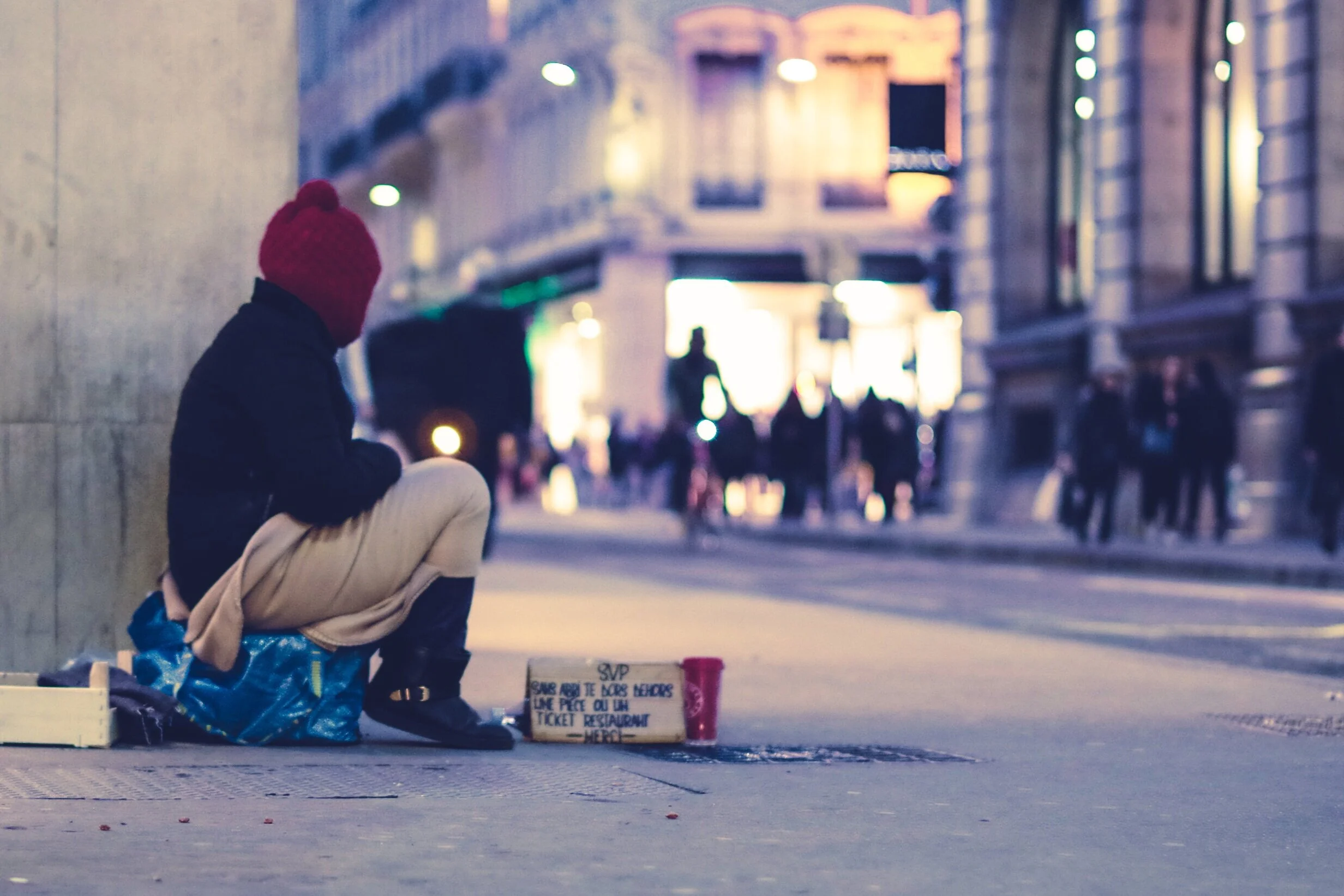
Fighting the Coronavirus and Protecting the Unhoused
Unhoused populations are always vulnerable to health risks and disease, a vulnerability now heightened by the coronavirus epidemic and the spread of COVID-19.
By Leo Beletsky Professor of Law, Northeastern University School of Law and Sterling Johnson Board Member, Angels in Motion; Black and Brown Workers Cooperative
Executive Summary:
On any given night in the United States, federal government data shows that over 500,000 people do not have a home, a count that dramatically underestimates the scope of the problem. The core problem has consistently been lack of access to affordable housing, brought on by bad policy and refusal to take common-sense, evidence-based approaches. The COVID-19 pandemic has brought this problem into focus, as neighborhood organizers take bold actions after governments refused to – like occupying vacant or unused homes – to provide the policy solution public health experts agree works best: housing the homeless.
Unhoused populations are always vulnerable to health risks and disease, a vulnerability now heightened by the coronavirus epidemic and the spread of COVID-19. People without homes more often come into contact with potentially infected surfaces and people, and those in emergency shelters must congregate in tight spaces and share facilities like showers and laundry.
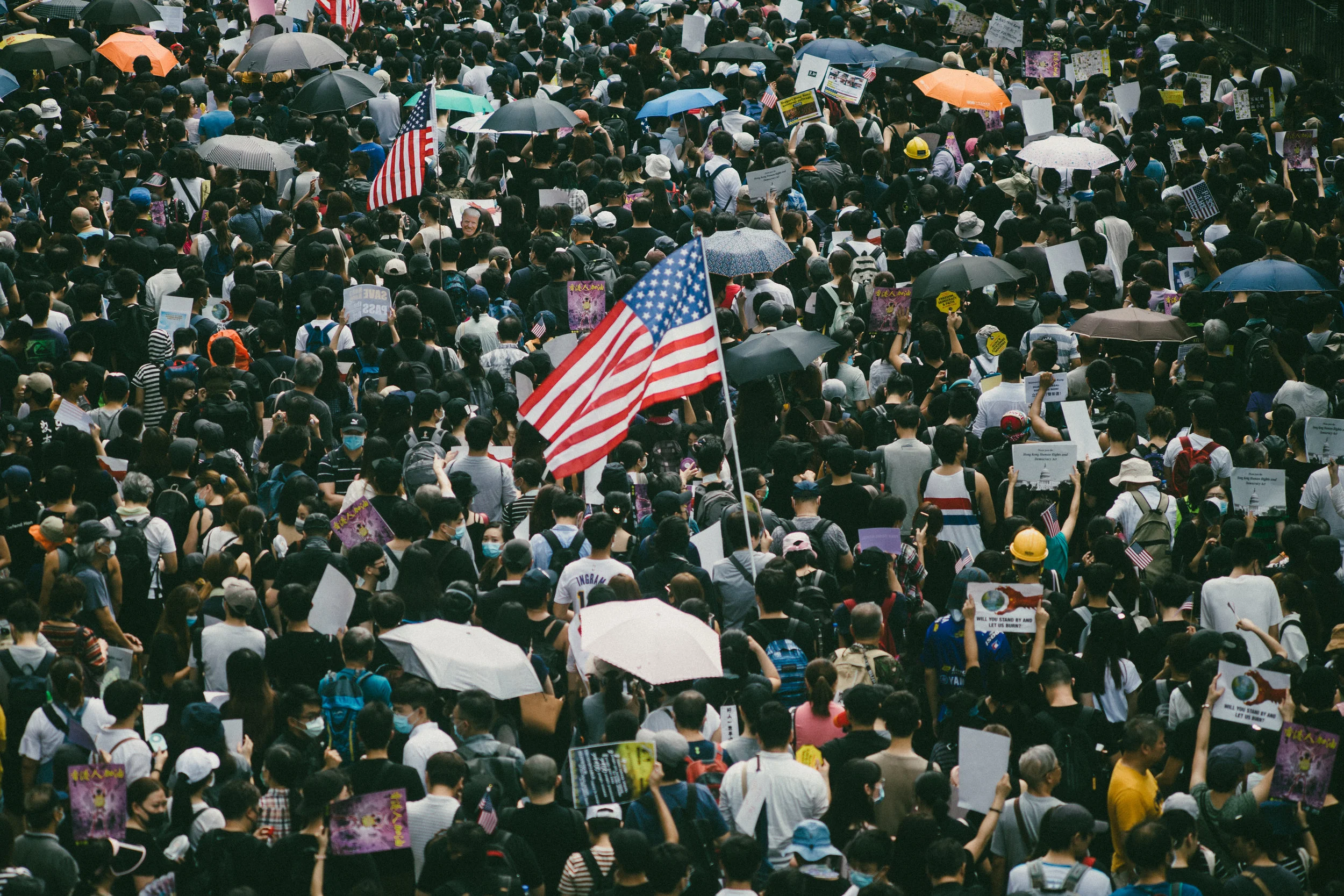
If protesters really want to end lockdowns, they should bring their protests to the White House
But for all the political tumult, the time when social distancing can successfully end is no mystery. Public health officials know exactly when it will be - when the country has broadly implemented three crucial steps: testing, more testing, and still more testing.
By Robert I. Field
We all eagerly await the time when we can emerge from lockdown and society can be reborn. No one more so than those thrown out of work and desperate for their paychecks.
The slow pace of economic revival has brought protesters to state capitols, egged on by President Trump’s encouraging tweets. But for all the political tumult, the time when social distancing can successfully end is no mystery. Public health officials know exactly when it will be - when the country has broadly implemented three crucial steps: testing, more testing, and still more testing.
Testing for the presence of the virus in the population is our flashlight in the dark. Without it, we are left to stumble around blindly. Public health officials can’t trace contacts of those who have become ill, so they can’t get a clear picture of where the disease is spreading, who has been exposed, or where it is likely to spread next. They are left to feel their way around without knowing what’s next.
Some other countries learned this lesson months ago and have been focusing their flashlights with encouraging results. Germany and South Korea are starting to lift social distancing restrictions based on aggressive federal testing policies. It is clear that national testing works.
How is national testing going here in the United States, the wealthiest country on Earth? For the most part, it isn’t. The Trump administration has left states to fend for themselves without national coordination.
Individual states are not and were never equipped to defend the nation from a global threat. That’s why the framers of the Constitution created the federal government. Asking the states to lead the fight against COVID-19 is like asking them to defend the country from a military threat. Imagine FDR announcing after Pearl Harbor that each state was on its own to fend off the armies of Germany and Japan.
Governors are desperate to relax the stay-at-home orders they instituted when the COVID-19 crisis threatened to overwhelm their health care systems. But they can’t act blindly and have been clamoring for federal help to perform the testing that they need. Acting too soon risks a resurgence of the virus that could be more widespread than the first round. What good would relaxing the orders do, if they soon had to be reinstituted, possibly in more stringent form?
Thirty-one states, mostly those that are more densely populated, need to significantly ramp up their testing to reach the necessary levels. Ten states need to add at least 10,000 tests a day. In New York, the number is 100,000, in New Jersey, 68,000.
The major holdup is the inability of the national supply chain to provide necessary testing supplies, like reagents and swabs. States with the greatest disease burden can’t get what they need. If ever a crisis called for national coordination, this is it.
While Dr. Anthony Fauci has warned that we are doing too little testing to get the country to where it should be, President Trump continues to insist that states can find what they need on their own. In the meantime, hospitals across the country report having limited access to tests for diagnosing patients.
The desire of the protesters at state capitols to reopen society is certainly understandable. But they are protesting in the wrong place. State governments are hamstrung without federal coordination and support for testing.
If the protesters really want to end the lockdowns as quickly as possible, they should bring their grievance to the greatest source of delay - the White House. That’s where the real power lies to bringing the country back safely.
Robert I. Field holds a joint appointment as a professor of law at the Kline School of Law and a professor of health management and policy at the Dornsife School of Public Health at Drexel University. He is an expert in public health law and policy and a member of The Inquirer’s Health Advisory Panel.
This blog post first appeared as an op-ed in the Philadelphia Inquirer.
Social Justice in COVID-19 Response: The Legal Issues We Have to Talk About
By Scott Burris and Wendy E. Parmet
As the United States attempts to mitigate COVID-19 through social distancing, quarantines and isolation measures, we enter uncharted territory, and face pressing social, epidemiological, and legal questions.
Although the law is not fully settled, extreme measures that shutter businesses and limit social interactions outside of the home are likely constitutional if and when they are reasonably necessary, based on scientific evidence and knowledge, and are the least restrictive means available to stop a significant risk to the public. But adherence to those principles is not the only constitutional issue to consider during this pandemic.
One key issue is how social distancing measures are implemented. Are they being enforced fairly, with exceptions and enforcement following science and evidence? Or are they being implemented in a manner that reflects existing economic, racial or ethnic disparities?
Neutral rules are often enforced in a biased way. Law must be vigilant to ensure that people out for an authorized stroll or heading to an essential job are not treated differently by police because of their skin color.
It is also important that regulations not be applied in a manner that hints of partisanship or censoring. Public health emergency powers are broad, but they do not override core First Amendment rights. In the face of dramatic failures in the government’s handling of the earlier stages of this crisis, the rights of investigative journalists and public employee whistle-blowers merit protection in particular.
Likewise, the legal system has to ensure that people in jails, prisons and immigration detention centers have the same protection from infection and high quality health care as people in condos and gated suburbs. If, by placing someone in detention, the government prevents them from protecting themselves, it must provide for their safety and treatment.
These are familiar constitutional issues, with answers in long-established principles.
The consequences of unprecedented social distancing measures also point to less-common constitutional claims that will test the capacity of the legal system to respond to our deep social inequality. These questions speak as much to the constitution in our minds – our understanding of our social contract – as they do to the one written on parchment.
If, at this strange moment, most of us have been shaken out of our comfortable bubbles of curated facts, we have a chance to think about what we would like our country to be. Revisiting our understanding of our federal and state constitutions is one way to articulate a different vision of what we can fairly expect from our governments and each other.
When basic rights are taken away by legal orders and viruses, the nature of our basic rights and our relationship to the government looks different. Our Constitution and our laws are supposed to create legal environments in which we can strive and thrive and a society we can all be proud and happy to inhabit. As we face COVID-19, we are forced to reexamine what that requires. Are there rights to the satisfaction of basic needs to be found and developed in constitutional provisions that have traditionally been interpreted only as protection against government action?
Certainly we have a right to a government that acts with basic competence and implements its orders fairly impartially.
Beyond that, many of the federal, state and local emergency rules include protection against eviction, and politicians are promising that both businesses and individuals will be funded in some way to hold on until the crisis passes. They’ve promised free testing and universal access to health care, too, and few are suggesting any of this is wrong.
We could see all this as just simply necessary to avert disaster, but once we acknowledge that a basic income, access to health care and housing are essential to both the well-being of individuals and the community writ large, we have to ask why they only kick in during a national crisis. For millions of Americans, insecurity in housing, health care, and even groceries has long been daily life.
In the U.S., we are used to thinking about a lot of basic human needs as being matters of individual responsibility. COVID-19 forces us see that food, shelter, a resilient disease control system, and access to health care are essentials. For the moment, our government is beginning to recognize its responsibility to ensure these critical functions.
Will it continue to do so once the crisis has abated? Will we need to wait for the next crisis – and surely there will be one – to put these needs more firmly on our national agenda as fundamental rights, and understand their importance to the healthy operation of our country?
At this moment of national concentration and cohesion, we have a chance to say “no.”
This article was originally posted on the Bill of Health blog.